

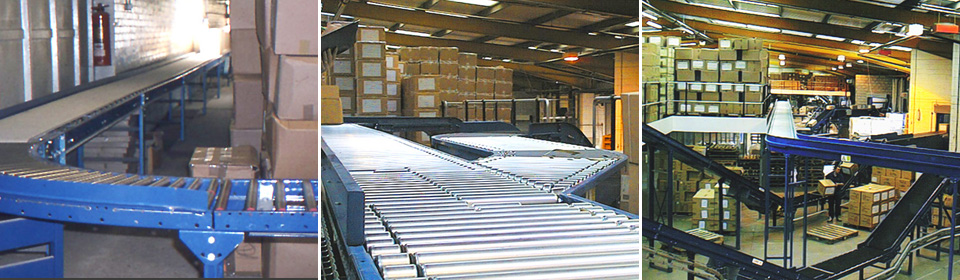
Belt Power Roller
Belt & Powered Conveyors
Here at Midland Handling Equipment, we offer high-quality belt power roller, strap conveyors, powered & gravity rollers and stainless steel conveyors. Many people are left confused with the different types of conveyors available so allow us to explain.
A belt power roller is the most well-known type of conveyor system around the world and consist of flat belts one after the other. This form of conveyor can only support lighter products, anything too heavy will cause too much of a strain on the conveyor system and cause damage. Power rollers have many individual rollers one after each other.
We also offer waste conveyors and Slat Conveyors. If you would like more information on any of our conveyor systems, or advice on which your business would need then contact us today.

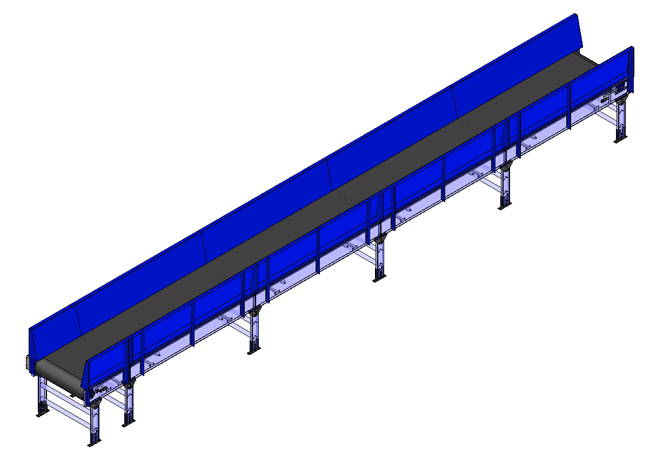
Belt Conveyors
A belt conveyor is probably the most well-known form of conveyor system as it has been around for centuries. A belt conveyor consists of two or more rollers with which a belt tensioned between, hence where the name comes from. At least one of the rollers is powered by a geared motor which in turn moves the belt around all the rollers. This type of conveyor system can very drastically in shapes and sizes. Belt conveyors can be used from the smallest to the largest of applications. Belt conveyors can incorporate inclines and declines for between floors or mezzanines and even bends to suit the more complex of logistics needs. Extendable belt conveyors (also known as telescopic) are ideal for loading and unloading lorries or warehouses. Belt conveyors are mainly used in supermarkets and for light produce in warehouses.
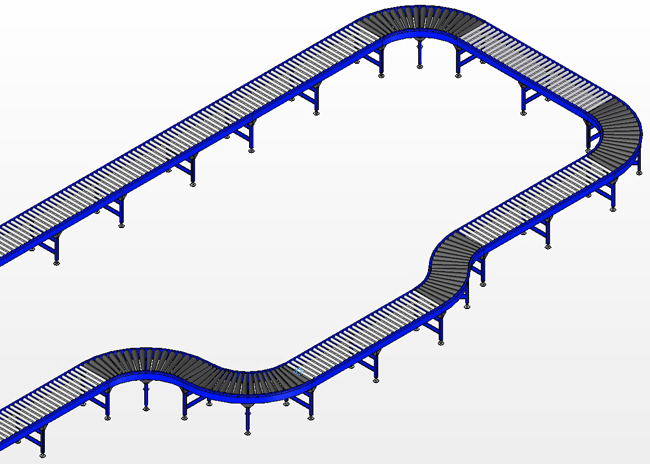
Powered and Gravity Roller
Roller Conveyors are exactly what the name suggests, a long line of free running or powered rollers to support your product. The free running rollers are usually known as gravity roller as they are usually made with varying degrees of downward slope to allow gravity to aid the product in transit, however, it can just be a matter of manually pushing down a line. Powered roller conveyors are fundamentally the same but one roller (at the start of the line) will be powered and will transfer its power to all other rollers on the line via intertwined bands. Powered roller and belt conveyors can all be interchanged within a line along with additional components such as bends, switches, turntables etc. We offer a full range of different rollers for individual conveyor systems, to make them unique to your company. For a good example of how all three can be used together please see our case study on Shoe Zone Group Ltd.
Stainless Steel Conveyors
Here at Midland Handling Equipment, we offer a broad range of stainless steel conveyors. Our conveyors are built to specific client’s requirements and are most commonly used in the food industry, pharmaceutical industry and other hygiene industries. They are ideally used for where aluminium is not approved and where rigorous hygiene regulations are in place. We pride ourselves in providing the highest quality, long-life machines to every company. Aluminium is the easiest material to clean when it comes to conveyors and they are highly recommended throughout most companies worldwide. With stainless steel conveyors, we believe our offering is one of the best in the market.